|
|
|
|
|
|
|
|
|
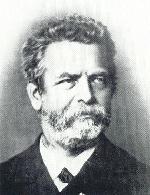
Heinrich Oidtmann I, M.D.
(1838-1890)Dr. Oidtmann I was a country doctor in Linnich. In 1857, he founded the workshops, which quickly developed from small businesses into a flourishing enterprise of worldwide reputability. A
catalogue published in 1890 refers to more than 100 qualified employees and global export. |
|
|
|
He was awarded numerous medals at domestic and international exhibitions including locations such as
Dublin (1865), Porto (1865), Paris (1867), Vienna (1873), Sydney (1879), London (1884), Antwerp (1885), Aachen (1886) and Cologne (1888). |
|
|
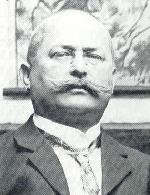
Heinrich Oidtmann II, M.D.
(1861-1912)Dr. Oidtmann II first practised as a doctor in Aachen. The workshop prospered under his expertise and skilled leadership. In particular, his endeavors stressed research. In a book
published in 1959, 100 Jahre rheinische Glasmalerei (100 Years of Rhineland Stained Glass Painting), Dr. Hans Kisky of the Denkmalamt1
in Bonn wrote, ”In the Rhineland, very few scientists have approached his level of knowledge in the area of stained glass painting.”2 From the scientific publications he himself wrote, one is
particularly notable by having received the prized award of the Mevissens-Stiftung; ”die rheinischen Glasmalereien vom 12.-16. Jahrhundert"3 (Verlag (published by) L. Schwann, Düsseldorf 1912). |
|
|
|
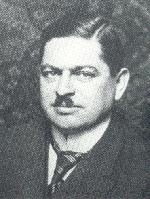
Dipl.-Ing.4
Heinrich Oidtmann III (1888-1929)His most notorious merit, next to his expertise and leadership of the workshops, is his continuation of the scientific work of his father through the publication of the
”Rheinischen Glasmalerein” Band II (”Rhineland Stained Glass Painting” vol. II (Verlag (published by) L. Schwann, Düsseldorf 1929). |
|
|
|
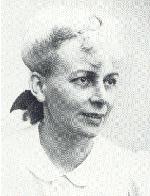
Ludovika Oidtmann (1899-1945
After the early death of her husband in 1929, L. Oidtmann took over leadership of the workshops. She sought out and made contact with the contemporary artists. It is difficult to imagine how she successfully
led the workshops in this difficult time (worldwide depression, Nazi regime and war). This can be considered the greatest human achievement in the history of the company. |
|
|
|
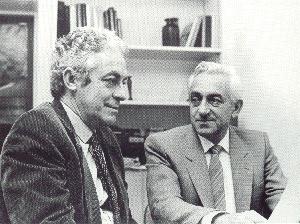
Friedrich Oidtmann (*1924) and Ludovikus Oidtmann (*1928)Due to the death of their mother, 21 year old Friedrich and 17 year old Ludovikus Oidtmann took over management of the workshops. The workshops were completely
destroyed during the war; rebuilding was therefore like a new business founding. The brothers considered it an obligation to continue leadership of the work, which was begun in 1857 by their great-grandfather and
passed down through three generations, and to set pioneering accents for the future. |
|
|
|
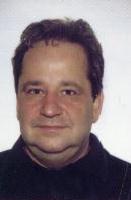
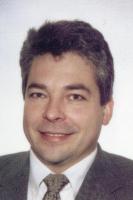
Heinrich Oidtmann (*1958) and Dr. Stefan Oidtmann (*1959)The two sons of Friedrich and Ludovikus Oidtmann were well prepared through university studies and professional training at a glass works technical school for the takeover
and leadership of the workshops and have been managing the workshops for several years. They see it as an important task to cultivate and maintain contact with the contemporary artists, to optimally translate
their designs onto glass and to be open for experimentation. Additionally, they have great interest in working jointly with the office responsible for the restoration, care and preservation of works of art, with
diligence, expert knowledge and use of the latest scientific discoveries. From 1989 to 1996, Dr. Stefan Oidtmann was the project director for a research network in the field of ”Analysis of the Effectiveness of
Current Protective Glazing as well as Development and Testing of New Protective Glazing Compositions” for the Ministry of Research and Development. In 1994, he was appointed to the Technische Komitee des CVMA (Corpus
Vitrearum Medii Aevi) Deutschland. Since 1997, the company has been one of the sponsors of the
Deutsche Glassmalerei-Museum Linnich. |
|
|
|